
What we said, launched, and learned across New York, San Francisco, and London
Most industry event recaps read like a calendar. Ours is going to read like an argument, because across three cities and five stages the same point kept surfacing: supply drifts from publishers, commerce media stops at the add-to-cart, media plans stay still while audiences move.
Naming the problem is the easy part. So in the same two weeks we put forward what we think fixes it: an exchange built so publishers keep control of inventory, data, and yield. A framework for running offsite commerce media across the whole funnel instead of the last inch of it. Creative formats and measurement that show which work actually moved someone. And a campaign willing to make fun of the dysfunction while pointing at the cure.
Here is the catch-up.
Programmatic I/O, New York: the quiet renegotiation
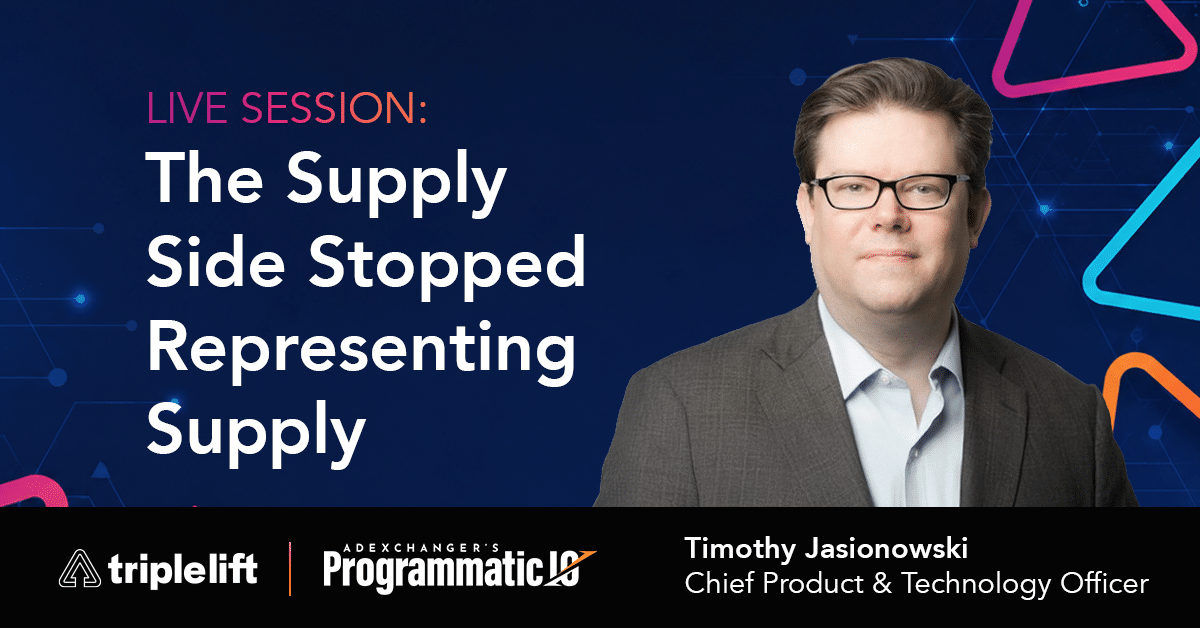
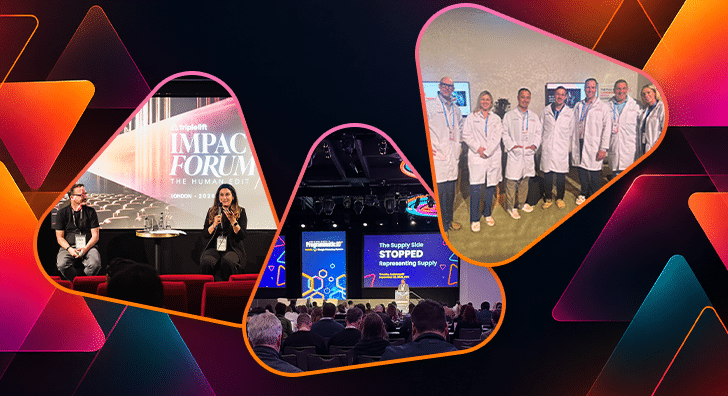
Our CPTO, Timothy Jasinowski, used his time on stage to name something the supply side has normalized. A number of SSPs once pledged to stay firmly on the publisher’s side. Many have since built architecture that moves demand functions inside their own exchanges. Nobody announced a change of position. The architecture announced it for them.
TripleLift is going the other direction: real publisher control over inventory, data, and yield. The goal is growing the value of each impression, not extracting more from it.
That sounds like a supply story. It is also a demand story. When publishers keep control, they can invest in better ad experiences, and better experiences are where advertisers actually see results. Buyers get a clearer view of what they are buying and where it runs. And because we are not building demand functions into the exchange, you can plan and bid knowing the marketplace is not tilted against you.
Healthy supply is not charity. It is the condition for a healthy marketplace on both sides.
And the conversations kept going after the session at the happy hour we co-hosted with DoubleVerify.
Amazon Unboxed, San Francisco: introducing the Offsite Impact Framework
Most marketers already believe offsite matters. What has been missing is a way to do it. So at Unboxed we introduced the Offsite Impact Framework: a way to orchestrate supply, data, and creative against different KPIs at different points in the funnel.
Taylor Stewart, our VP of Growth and Emerging Channels, laid out the gap it closes on stage alongside Stackline: “If you’re just focusing on the conversion, you’re leaving the rest of the consumer journey on the table.”
The numbers back the frustration. Only 15% of marketers think of commerce media as full-funnel.¹ Meanwhile 80% of commerce and retail media spend goes to onsite executions.² The mid-funnel is the most under-serviced stretch of the journey and the most available competitive advantage in it.
Greg Wolny, VP Professional Services at Stackline, made the case for products that need explaining before they need buying. Informative content in front of the right consumer drives traffic back to retailers like Amazon. His caveat was the useful part: “Relevant creative is key, but KPIs for understanding relevance is essential. Are we growing share or driving sales?” That is where third-party impact measurement earns its keep, showing which creative drives which action.
Content plus context is where the magic happens. The path for commerce media’s growth is full-funnel, and the maturation of offsite is what makes it possible.
Impactine: a diagnosis the industry has been avoiding
Do you suffer from Impact Dysfunction?
It is what happens when creative, supply, audience data, and measurement do not talk to each other. Symptoms include impressions without outcomes and dashboards without answers.
Impactine is our parody CTV ad, styled like a DTC pharma commercial. It launched at unBoxed where a lab-coated team handed out pill bottles (with orange Tik-Taks). The campaign is running cross-channel, and cross-device.
The joke is the door. The point behind it is serious: fragmentation is not a tooling problem you solve by adding another tool. Watch the spot at impactine.com.
Impact Forum London: the Human Edit
Our final Impact Forum of 2026 took place October 1 at The Garden Cinema in London, and we deliberately did not talk about tech stacks.
The industry spends enormous energy on algorithms and scale. We wanted a night about the thing that actually produces good work: the people. The format was a masterclass on presence and comedy mechanics, career truths traded over escalating levels of spicy food, and conversations about what people care about off-screen.
The goal was not inspiration. It was takeaway: everyday habits, storytelling tricks, and leadership moments turned into something you can use on Monday. Thank you to everyone who leaned in and opened up.
Advertising Week New York: audiences move, media plans don’t
Back in New York, we continued at full speed to make an impact during Advertising Week.
The week started on a high note: our Chief People Officer, Abby Hamilton, was shortlisted among 25 outstanding women for the Future is Female Awards. Well deserved.
At The Female Quotient’s panel, Lauren Gabriele, our VP of Enterprise Business Development, joined panelists from Rokt, T-Mobile, and American Airlines to tackle a simple mismatch. “As a consumer, you’re not thinking in terms of channels when you’re on a website, streaming video, or in a mobile app. You’re following your own circuitous journey. TripleLift is trying to match that.” Her sharpest line was the warning attached: you can follow people around all day, but the wrong context makes it pointless.
Three things stuck with us:
- Trends are shorter than ever and attention moves faster than most buying cycles. Agentic capability is where flexibility comes from: shifting spend between channels, reshaping creative into new formats, and reacting to real signals rather than last quarter’s plan.
- Ad fatigue is real. Showing up everywhere is not a strategy. Knowing when to show up is.
- Fragmentation is not only a reach problem. It is an insights problem. You cannot plan sensibly across the full media experience if you can only see pieces of it.
The conversations carried into the happy hour we hosted with DoubleVerify, with good cocktails and a great view of New York.
What two weeks added up to
Different rooms, same diagnosis. Supply that drifts from publishers, commerce media that stops at conversion, and media plans that stand still are all versions of the same problem: parts that were never designed to work together.
That is the work. Creative, curation, audience, measurement, and optimization operating as one system, so there is a clearer path from impression to business outcome.
See you at the next one.